
If you’ve heard the term integration in Pilates classes and wondered what it really means, you’re not alone. At Forum Pilates, a Reformer Pilates studio serving Edmonton and surrounding communities, integration is one of the principles that sets Pilates apart from other fitness methods. Understanding it can help you get more from your practice — and move better in your everyday life.
Integration: More Than Just a Buzzword
In Pilates, integration refers to how the body works as a complete system rather than a collection of isolated muscles. Instead of training one muscle at a time, integrated movement connects the entire body — from your feet to your hands, from your shoulders to your hips — in coordinated patterns.
Think of integration as the bridge between controlled movement and functional movement. It’s not just about doing exercises correctly; it’s about moving efficiently, safely, and with purpose — both on the Reformer and in real life.
Why Integration Matters in Pilates
Pilates is already known for building strength, improving posture, and enhancing body awareness. Integration takes those benefits a step further by making your whole body work together in harmony. Here’s how it helps:
1. Better Functional Movement
When muscles work together as a team, everyday tasks — like lifting groceries, walking up stairs, or reaching overhead — become easier and less stressful on the body.
2. Improved Coordination
Instead of isolated muscle contractions, integrated movement encourages smooth, rhythmic, and coordinated patterns that feel more natural and efficient.
3. Injury Prevention
Balanced, integrated muscles support joints better and reduce the risk of overuse injuries — a major advantage whether you’re active or simply managing day‑to‑day movement.
4. Enhanced Core Stability
Integration places the core at the centre of movement, helping you create stability and control without tension or strain.
5. Mind‑Body Connection
Integration encourages mindful movement — paying attention to breath, alignment, timing, and quality — which deepens every Pilates session and improves body awareness.
What Integration Looks Like on the Reformer
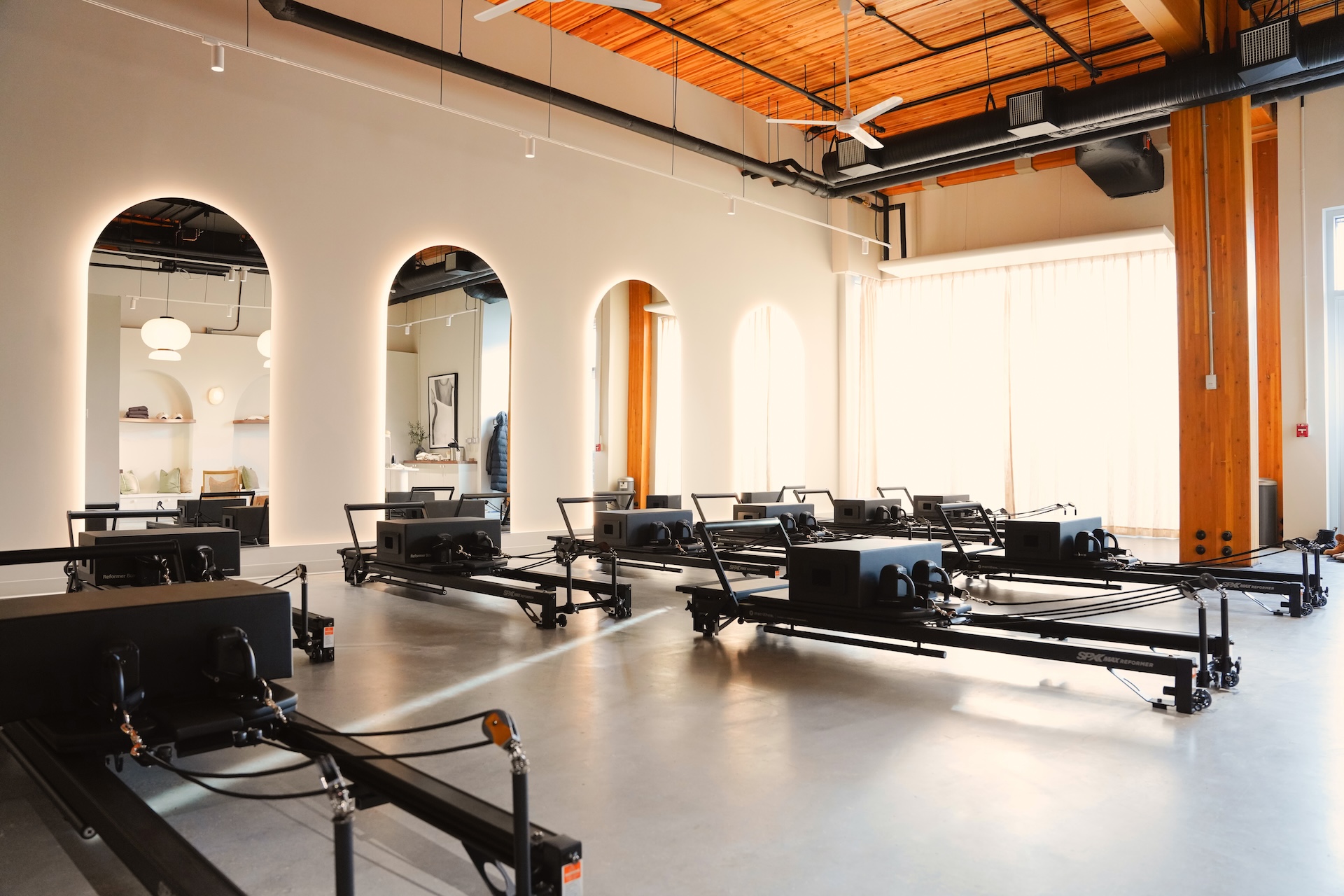
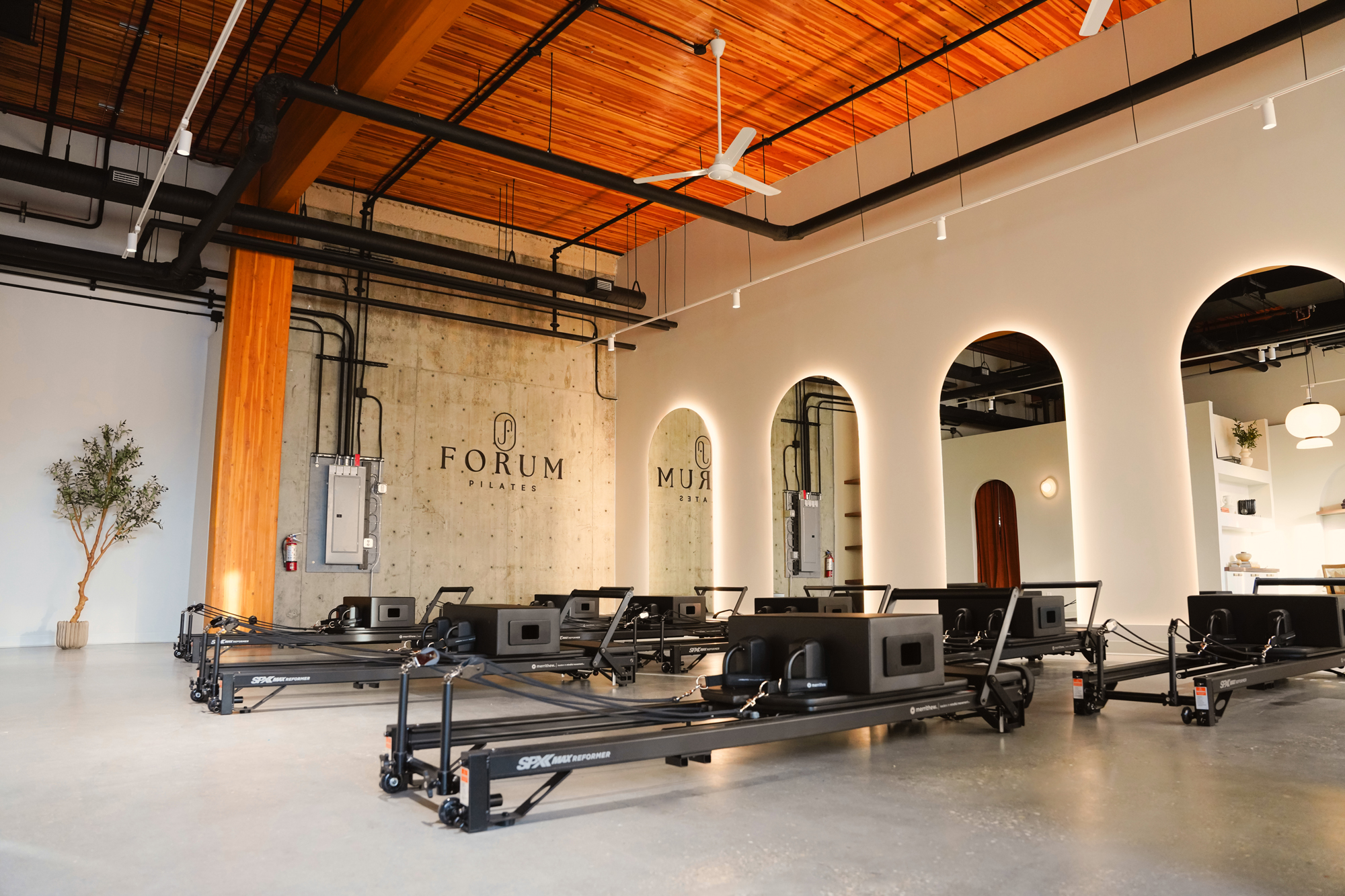
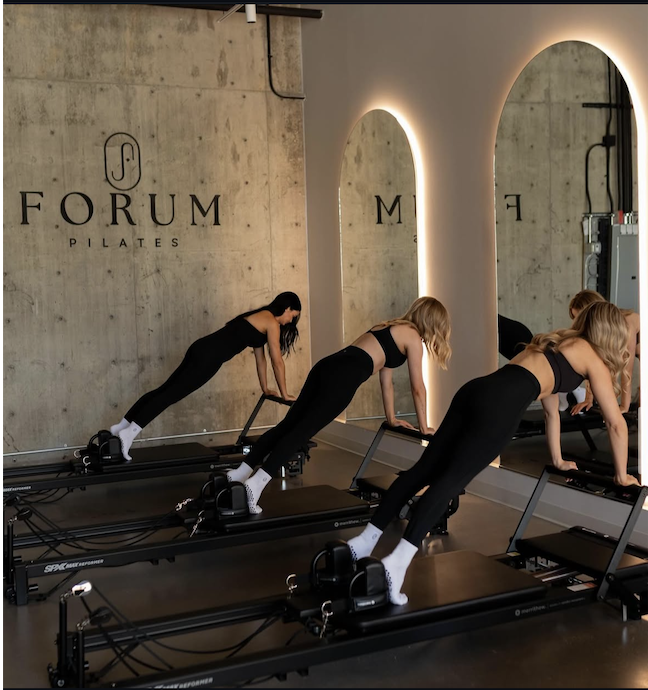
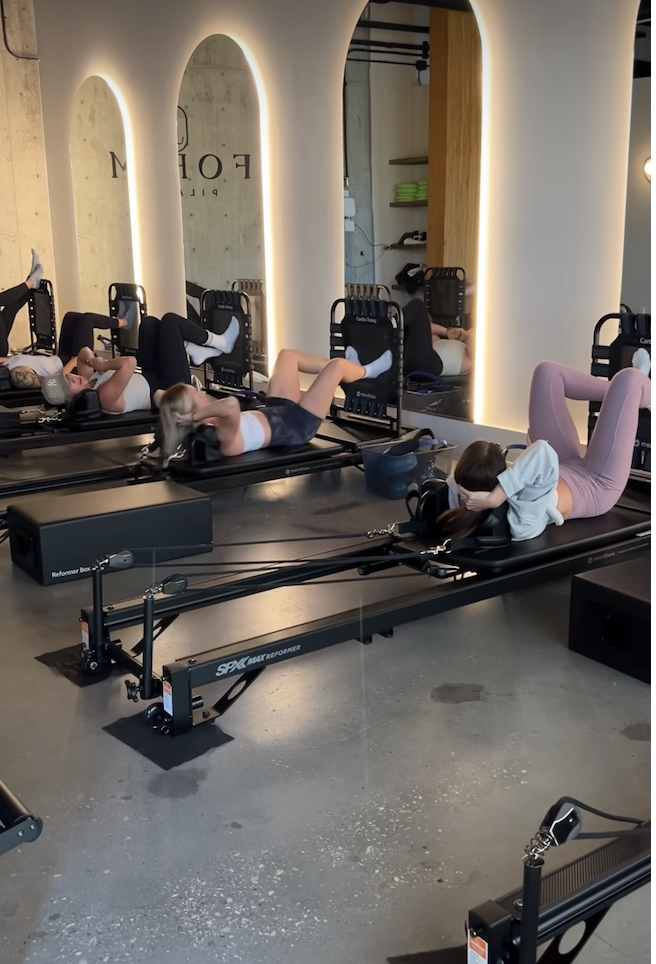
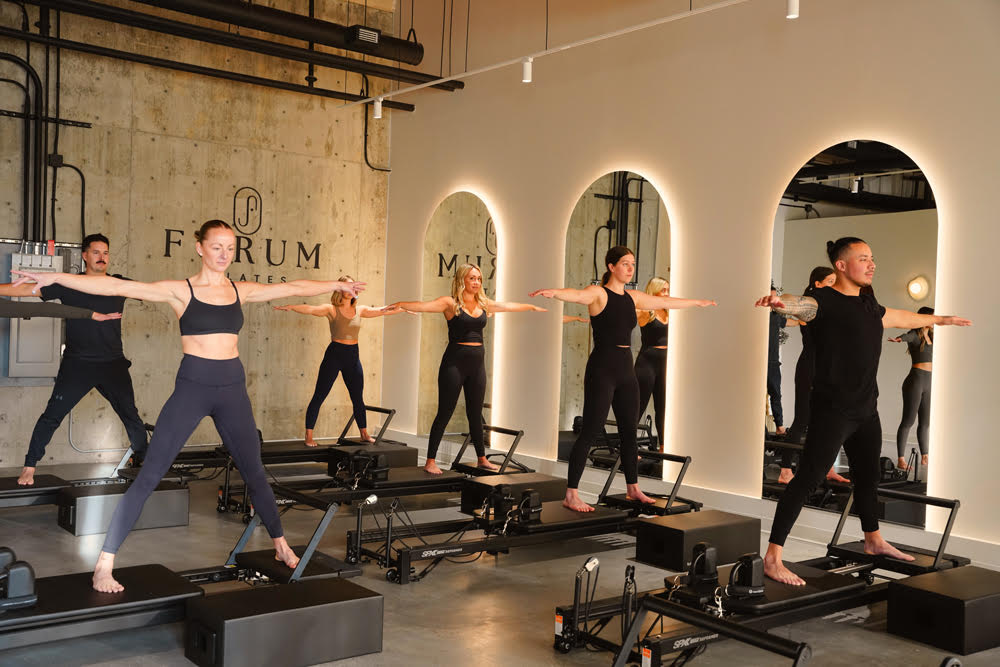
In a Reformer Pilates class at Forum Pilates, integration is woven into every exercise. Instead of focusing on one body part in isolation, instructors guide you through movements that:
- Engage your core in relation to your arms and legs
- Connect breath with motion
- Align your spine and joints for balanced strength
- Activate stabilizer muscles that often go unnoticed
For example, during a Reformer footwork series, integration isn’t just about pushing with the legs — it’s about coordinating foot placement, pelvis stability, breath timing, and shoulder positioning all at once.
Integration vs Isolation: What’s the Difference?
It’s helpful to see integration as the big picture and isolation as the details. Some fitness methods emphasize isolated muscle training — like doing a bicep curl to strengthen just one muscle. Pilates — especially when integrated — prioritizes movement patterns that involve multiple muscles working in concert.
This doesn’t mean we never focus on individual strength. It means strength training in Pilates always serves movement patterns that are functional, balanced, and efficient.
Integration: A Foundation for Everyday Life
Whether your goal is improved athletic performance, pain‑free movement, better posture, or simply feeling stronger and more confident in your body, integration in Pilates offers lifelong benefits. What you learn in the studio transfers into how you walk, stand, lift, reach, and move in your daily life.
Start Exploring Integration at Forum Pilates
At Forum Pilates in Edmonton, our instructors specialize in helping clients of all levels experience the power of integrated movement. Every Reformer session is designed to help you move smarter — not just harder — and build strength that feels practical, connected, and meaningful.
If you’re ready to take your Pilates practice to the next level or are new to Pilates and curious what integration feels like, our team is here to support you every step of the way.
Visit Forum Pilates to explore our Reformer Pilates classes and discover what integrated movement can do for your body and your life.
Book Your Class at Forum Pilates Today