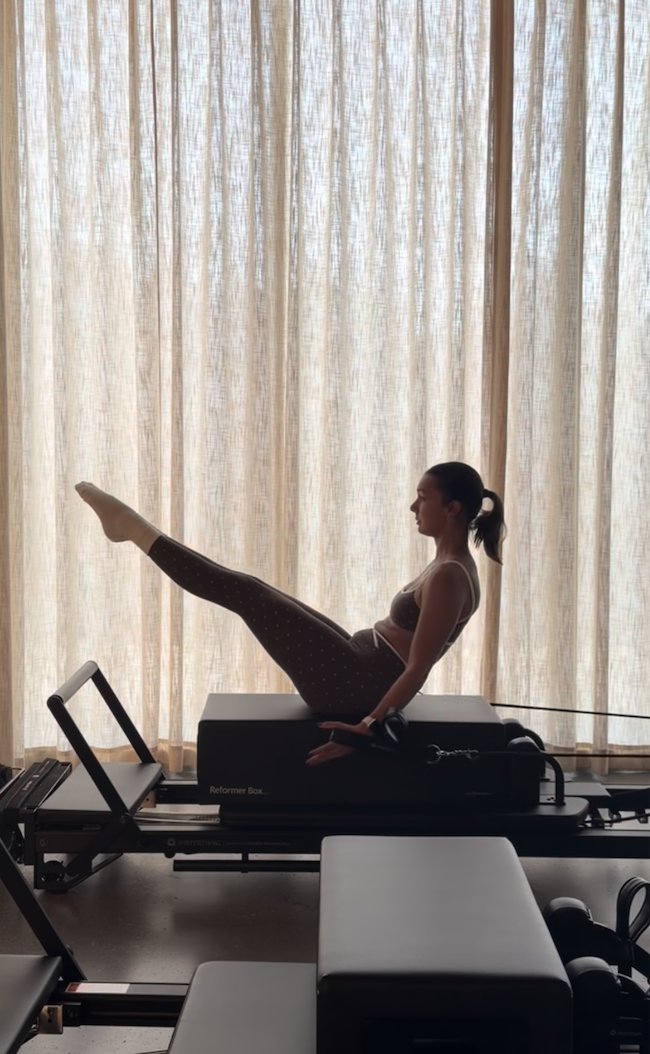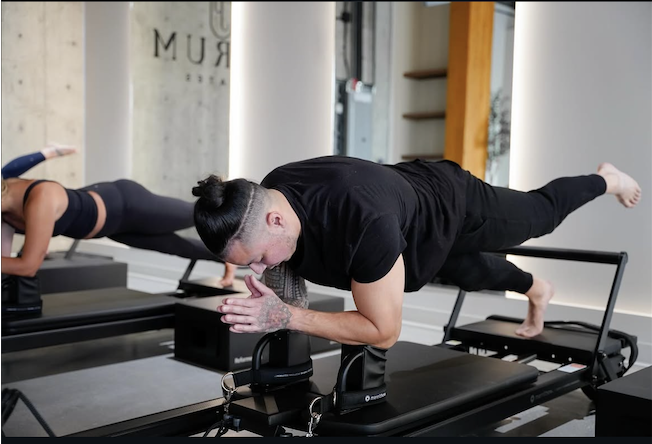
If you think Reformer Pilates is all about your abs, think again. While core strength is a big part of the workout, Reformer Pilates challenges muscles throughout your entire body, from your glutes and legs to your shoulders, arms and back.
At Forum Pilates in Edmonton, Reformer classes combine controlled movements, spring resistance and mindful breathing to create a full-body workout that builds strength, improves mobility and challenges your muscles in different ways. Whether you’re new to Pilates or looking to add something different to your existing fitness routine, understanding which muscles are involved can help you get more out of every class.
1. Your Core: Abs, Obliques and Deep Stabilizing Muscles
Your core does much more than create visible abdominal definition. It helps stabilize your spine and pelvis, supports balance and allows you to control your movements.
Reformer Pilates challenges several muscles that make up your core, including:
- Transverse abdominis: Deep abdominal muscles that help stabilize your trunk.
- Rectus abdominis: The muscles at the front of your abdomen, commonly associated with six-pack abs.
- Obliques: Muscles along the sides of your abdomen that assist with rotation and side bending.
- Lower back muscles: Muscles that help support your spine and maintain control during movement.
Many Reformer exercises require you to keep your torso stable while your arms or legs move against spring resistance. That means your core is often working even when an exercise appears to focus on another part of your body.
The result is a workout that develops core strength and control, which can carry over into everyday activities like lifting, reaching, walking and playing sports.
2. Your Glutes: Building Strength Through Your Hips
Your glutes are among the largest and strongest muscles in your body. They help extend and stabilize your hips, support movements like climbing stairs and contribute to balance and lower-body strength.
Reformer Pilates works your glutes through movements that involve pushing, lifting, extending and stabilizing your legs.
Exercises such as footwork, bridges and certain standing movements can challenge the gluteus maximus, which helps extend your hips, along with the gluteus medius and other muscles that support hip stability.
Because the Reformer uses adjustable spring resistance, exercises can be modified to suit different experience levels and strength goals. Your instructor can also help you focus on proper alignment so you’re using the intended muscles rather than relying on momentum.
Strong glutes are useful well beyond the studio. They play an important role in walking, running, lifting and maintaining control during everyday movement.
3. Your Legs: Quads, Hamstrings and Calves
If you’ve ever felt your legs working hard during a Reformer class, there’s a good reason. Many exercises involve repeated pushing, bending and straightening of the knees while maintaining control against resistance.
Different movements challenge different muscles:
- Quadriceps: Located at the front of your thighs, these muscles help straighten your knees. Reformer footwork is one example of an exercise that challenges them.
- Hamstrings: Located at the back of your thighs, these muscles help bend your knees and extend your hips.
- Calves: These muscles help control ankle movement and contribute to pushing through your feet.
- Hip stabilizers: Muscles around your hips help maintain alignment as your legs move.
The combination of resistance and controlled repetitions can make lower-body exercises surprisingly challenging without requiring high-impact movements like jumping.
Reformer Pilates can be a useful option for people who want to build muscular endurance and improve lower-body control while incorporating a lower-impact workout into their routine.
4. Your Back: Supporting Strength and Posture
Your back muscles help support your spine, control movement and maintain an upright position. They also work alongside your abdominal muscles to stabilize your trunk.
Reformer Pilates includes exercises that challenge the muscles around your upper and lower back, including the spinal erectors, latissimus dorsi and muscles around your shoulder blades.
Depending on the exercise, you may be pulling straps, extending your spine or maintaining a stable position while your limbs move. These movements can challenge the back muscles in different ways.
Building strength and awareness in this area may support better movement habits and help you maintain control during exercise. Posture also depends on mobility, daily habits and how your body moves as a whole, so it isn’t simply a matter of strengthening one muscle group.
5. Your Arms and Shoulders: More Than Just Leg Work
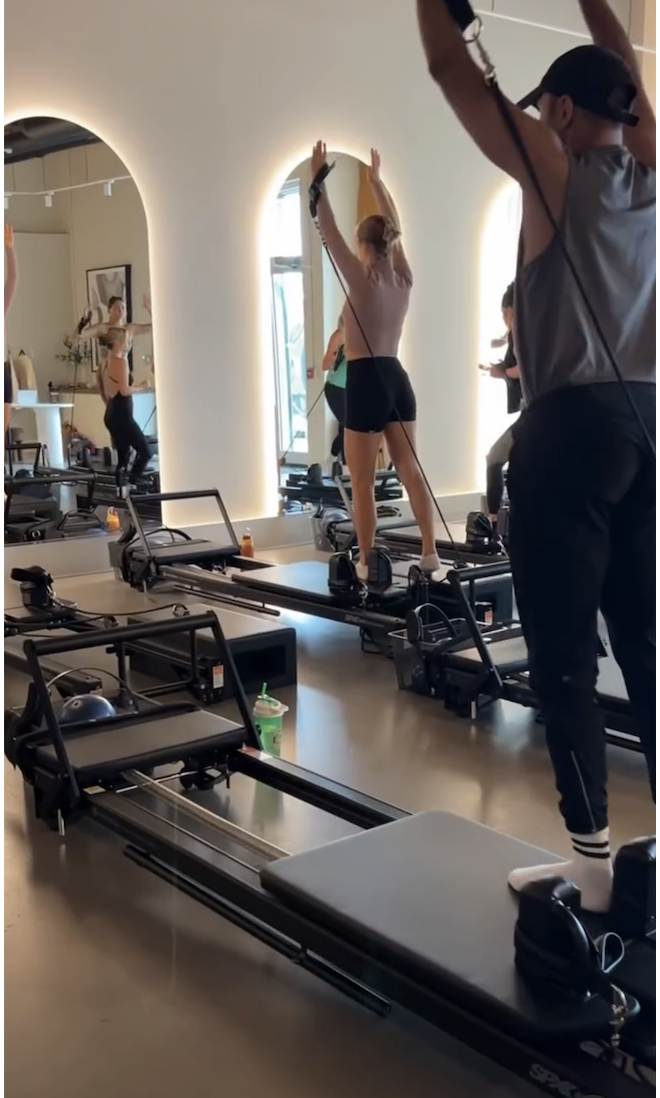
The Reformer isn’t just for your lower body. Its straps and springs provide opportunities to challenge your upper body through pushing, pulling and stabilizing movements.
Muscles commonly involved include:
- Shoulders: Help lift and control your arms during different exercises.
- Biceps: Assist with bending your elbows during pulling movements.
- Triceps: Help straighten your elbows during pushing movements.
- Chest muscles: Contribute to pushing movements and upper-body control.
- Upper back muscles: Help move and stabilize your shoulder blades.
Exercises using the straps can challenge these muscles while requiring your core to remain engaged. Some movements emphasize strength, while others focus more on coordination, control and muscular endurance.
This is one of the reasons Reformer Pilates can complement other forms of exercise. If you already lift weights, run or participate in sports, Pilates adds another way to work on full-body control and movement quality.
6. Why Reformer Pilates Works the Whole Body
One of the biggest differences between Reformer Pilates and many traditional strength exercises is how the body works together throughout a movement.
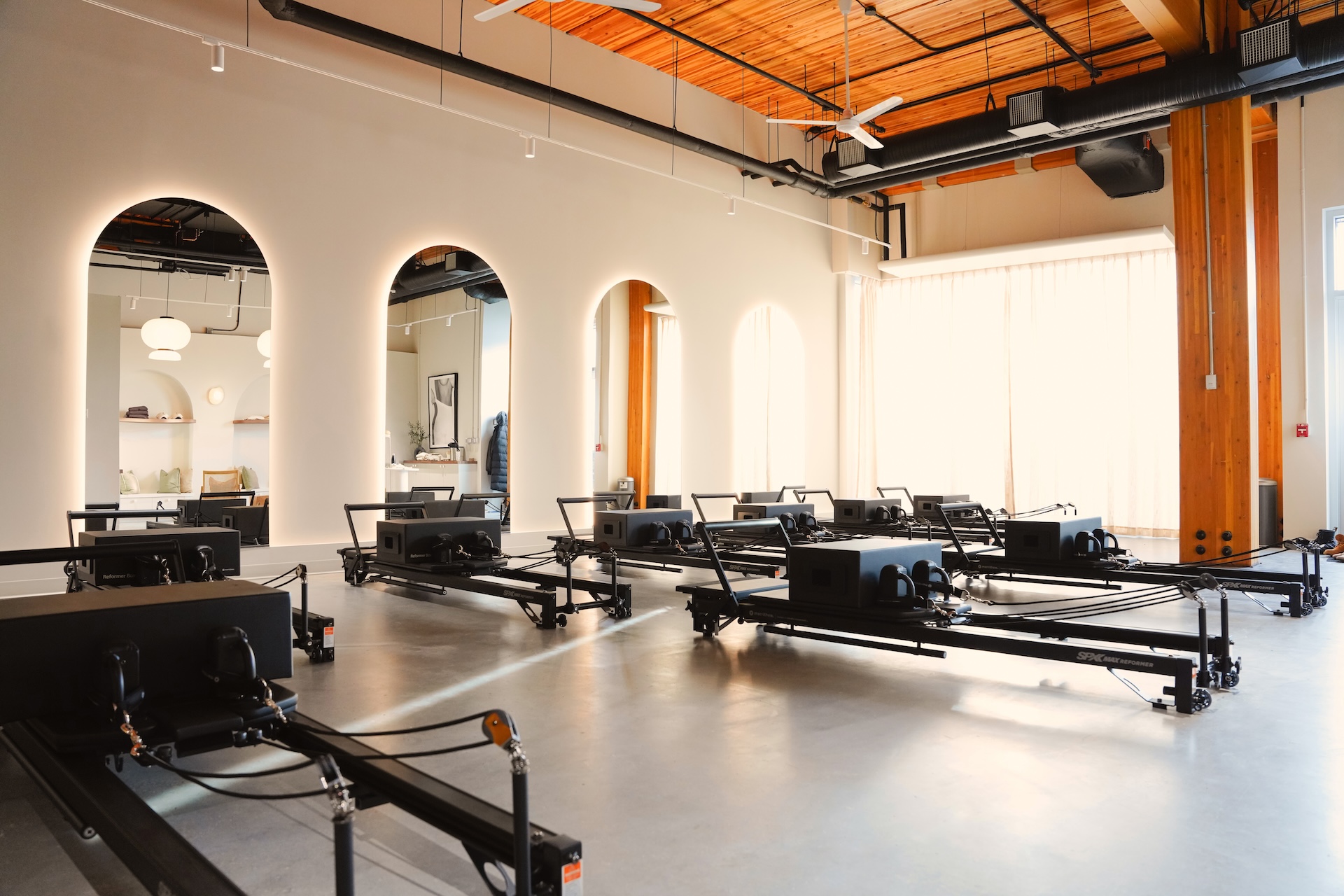
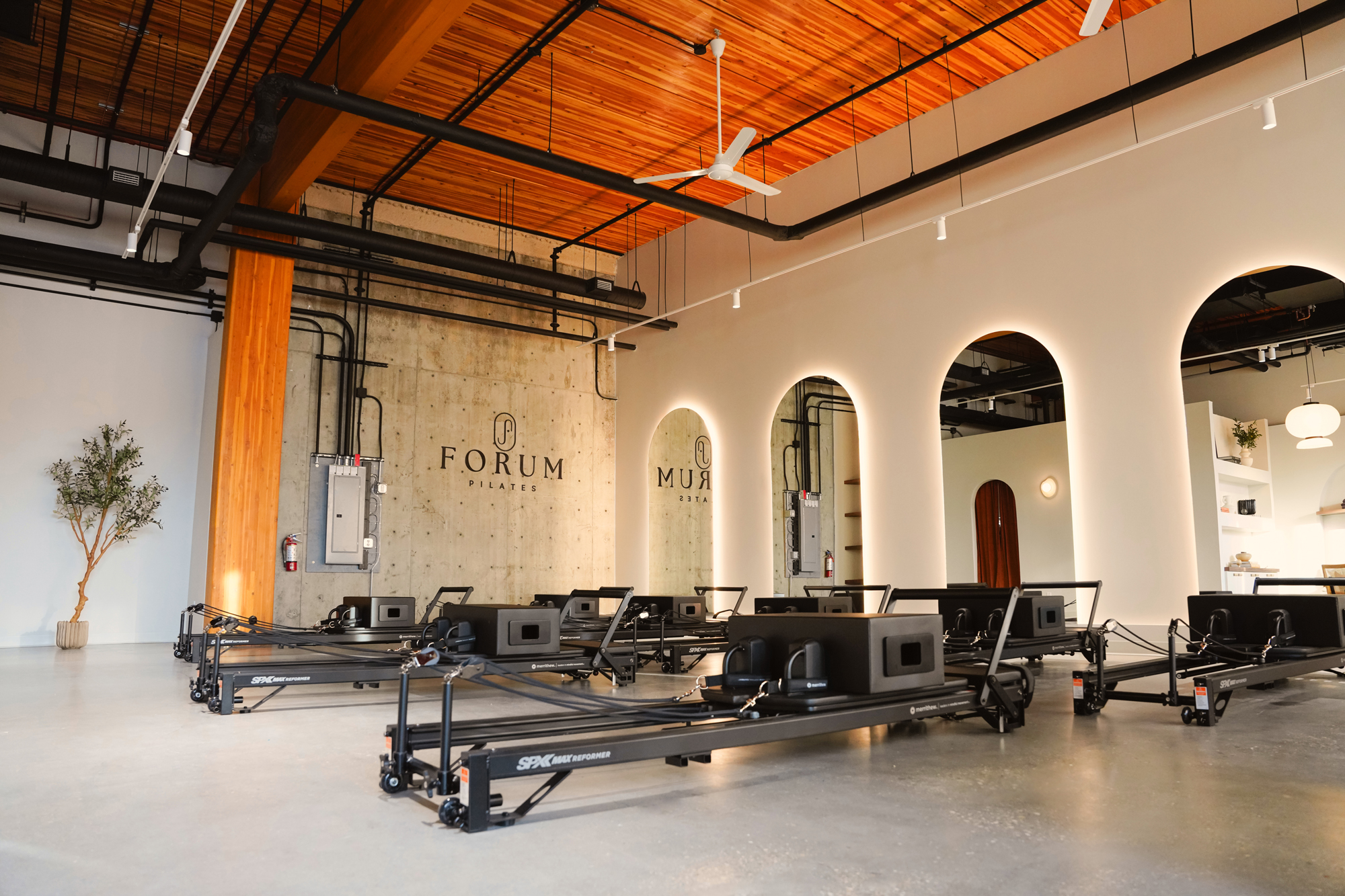
The Reformer features a moving carriage, straps and adjustable springs that create resistance. Depending on the exercise and spring setup, you may push against the resistance, control the carriage as it moves or stabilize your body while your arms and legs work.
This means an exercise can challenge several muscle groups at once.
For example, during a footwork exercise, your quadriceps, glutes and calves help produce the movement while your core supports your trunk and pelvis. During a strap exercise, your arms and shoulders may be doing the main work while your abdominal and back muscles help keep your body stable.
The goal isn’t simply to work as many muscles as possible. It’s to move with control, maintain good alignment and challenge the right muscles for each exercise.
Can Reformer Pilates Build Muscle?
Yes, Reformer Pilates can help build strength and, depending on the level of resistance, training experience and progression, contribute to muscle growth.
The springs provide resistance, meaning your muscles must work against an external load. As you become more experienced, exercises can be adjusted to provide an appropriate challenge.
However, the amount of muscle you build depends on several factors, including exercise intensity, consistency, nutrition, recovery and how your training progresses over time. People looking to maximize muscle size may also benefit from a structured resistance-training program alongside Pilates.
Reformer Pilates can be particularly useful for people who want to develop muscular endurance, improve control and build strength through a variety of movement patterns.
How Often Should You Do Reformer Pilates?
Consistency is more important than trying to do too much at once. If you’re new to Reformer Pilates, starting with a manageable schedule gives you time to learn the movements and adjust to the workout.
At Forum Pilates, two to three classes per week is a useful starting point for people looking to make Pilates a regular part of their fitness routine. Your ideal frequency will depend on your experience, recovery, other workouts and individual goals.
You may notice changes in how you control movements or approach exercises before you see visible physical changes. Strength and fitness develop over time, so focus on consistent attendance and gradually improving your technique.
Experience a Full-Body Reformer Pilates Workout at Forum Pilates in Edmonton
Reformer Pilates works far more than your abs. From your core and glutes to your legs, back, arms and shoulders, the exercises challenge your body through controlled movement and adjustable resistance.
Whether you want to build strength, improve mobility, complement your gym routine or try a different approach to fitness, Reformer Pilates offers a versatile way to work your entire body.
At Forum Pilates, our Edmonton studio provides a welcoming environment for both beginners and experienced Pilates enthusiasts. With instructor guidance and exercises that can be adapted to different ability levels, you can work toward your fitness goals at a pace that suits you.
Ready to try Reformer Pilates in Edmonton? Explore Forum Pilates classes and find a session that works for both of you.
Book Your Class at Forum Pilates Today